About The Artist
Aimée Baldwin
Contact


Biography
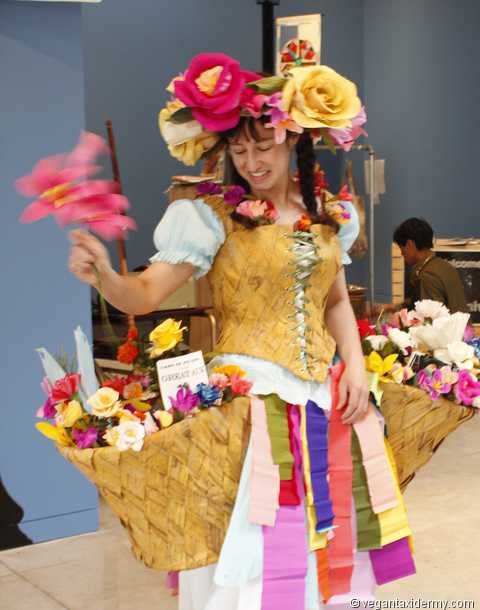
I am a self-taught sculptor and artist. My background includes a degree in digital media and theater arts, followed by professional experience in costume construction, Halloween merchandise prototyping, themed environment sculpture for restaurant and casino interiors, monument and park sculpture, boutique ephemeral gift-crafts development, and crafts instruction. My formative years as a budding artist have been greatly inspired by textile arts, decorative arts and crafts, and theatrical and tromp l'oeil practices. You can browse through some of these things on my "other work" page.
I have always worked with paper and textiles, as well as finding ways to incorporate salvaged materials. After finding a particularly high quality crepe paper, I experimented extensively with it, often creating gift crafts or decorative items to sell at local shops. The paper worked very well for creating flat organic shapes such as flower petals and feathers. I developed my own construction techniques for sculpting, using this paper and basic craft materials, and quickly moved on to exact species replication. Inspired by early natural history practices, I now present my work as botanicals or taxidermy.
Artist Statement
Creating Vegan Taxidermy allows me to simultaneously study details of the natural world and people's relationship with both nature and human-made objects. I find taxidermy fascinating because it represents a strange commoditization of nature, revealing conflicts between preservation and ownership, such as the nineteenth-century occurrence of killing the last few living specimens of (now extinct) birds for wealthy collectors. Thankfully, most birds are now federally or internationally protected from being bought, sold or collected in part or whole.
Rather than art for Art's sake, I view Vegan Taxidermy as connecting people to the natural world, contrasting against "cheap & now" consumer culture and the insular, disconnected world of Art. Concerns about habitat conservation, environmental issues, and the effects of consumer culture motivate me to distance my personal work, as well as many aspects of my life, away from mass production of disposable merchandise. Instead, I focus on individually sculpting unique pieces of art that emphasize highly skilled craftsmanship and whose delicate quality and variety reflect the natural world they honor.
It is my choice to try to create final pieces that have a universal aesthetic appeal, with a classic timeless look. While my chosen subject, taxidermy (real or fake), is very popular among contemporary artists, I aim to create work that will continue to have visual value, beyond trends or fads that will have a heavily dated look in the future. I try to create work that fits in a range of settings, from Regency to minimalist Modern.
The message my work carries is not easily readable, unlike many contemporary art styles which visually read like a political cartoon. What I offer is more akin to the new food movement that focuses on local, sustainable, and artisan quality; a carrot will still have all of the characteristics of a carrot, but the entire system that brings that carrot from being a seed to being consumed, is itself a quiet political revolution.
I have chosen to make work that does not lend itself well to mass production. It is a very slow process, taking me an average of about a week per bird. This makes it difficult to make a living from it, but it also hopefully means that I am not creating work that will end up in landfill within a few years.
I donate a percentage of my sales to local organizations supporting wildlife education, rescue and preservation.
Awards
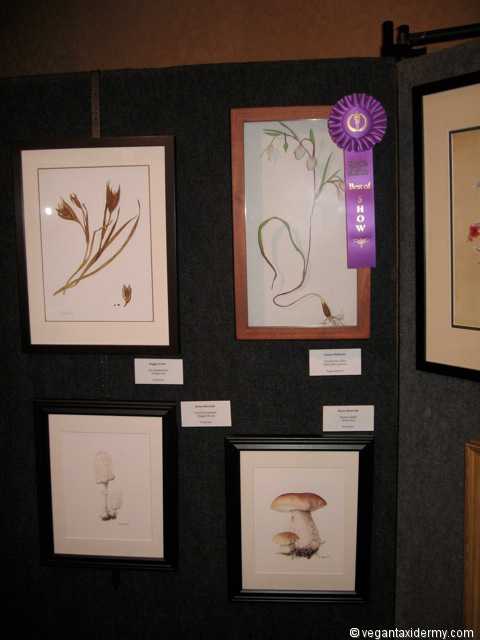
Calochortus albus, 2014
Crêpe-paper & wire
California Native Plant Society
Botanical Art Exhibition
People's Choice Winner
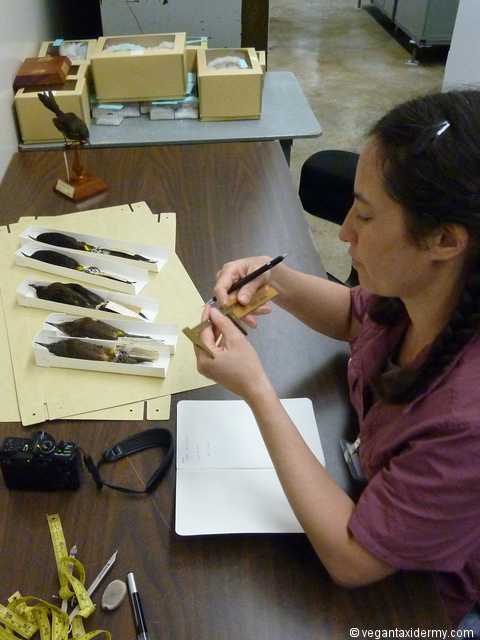
Distinguished Young Artist Award, 2013
The Evelyn and Peter Haller Distinguished Young Artist Award, supporting emerging artists who are members of the Society of Animal Artists.
Thanks to Isabel and Sheldon Sklar, sponsors. This award supported Aimée's research of the extinct Ō'ō (Moho sp.) at the Bishop Museum, Hawai'i.
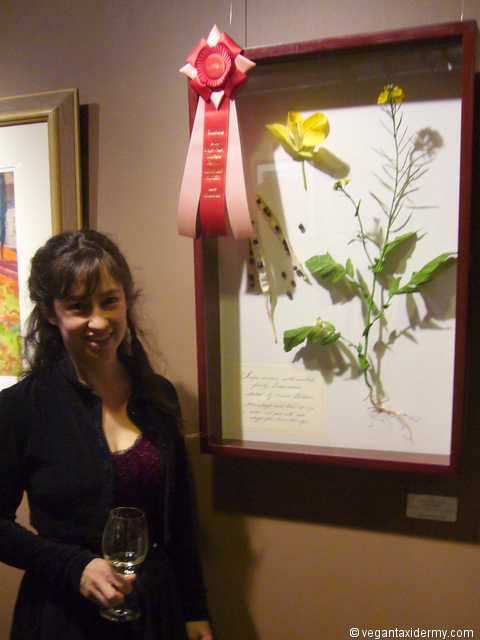
Sinapis arvensis, 2010
Crêpe-paper & wire
Napa Mustard Festival
2nd Place Winner, 3-D Art
Memberships
Guild of Natural Science Illustrators
Press
- Gardens Illustrated, November 2015
- Bishop Museum Blog, January 2015
- Our Hen House, January 2014
- El Periodico #16, Marzo 2013
- Grow The Planet, March 2013
- DesignSponge, September 2012
- PaperLab.Co, August 2012
- AllThingsPaper, June 2012
- Sierra Club, May 2012
- BerkeleySide, May 2012
- San Francisco SF Chronicle, January 2012
- Oprah Magazine, October 2011
- Bay Nature, Online Magazine, June 2011
- 20 Minutes, Spanish Newspaper, Abril 2011
- Boing Boing, March 2011